Dryer Taking Too Long to Dry Clothes – What to Check

Your dryer runs a full cycle, but the clothes still come out damp, so you have to run it again. Sometimes it takes two or three cycles to finish one load. This problem wastes time and electricity and is one of the most common dryer complaints in Stockton homes.
A dryer removes moisture by heating air and pushing it through the clothes. The moist air must leave the machine through the exhaust vent. When airflow is restricted or heat is weak, drying times stretch far beyond normal.
Why Long Drying Times Happen
Healthy dryers usually finish a regular load in 45 to 60 minutes. When a load regularly needs 90 minutes or more, or requires multiple cycles, something is wrong.
The most frequent cause is restricted airflow. Heat and moisture cannot escape properly. The dryer keeps running, but the clothes stay damp. In other cases, the heating system produces less heat than it should.
Most Common Causes
1. Clogged Lint Filter
The lint filter catches fibers from every load. When it is full or coated with residue from dryer sheets, airflow through the drum drops. Even a filter that looks clean can be blocked by a thin film of softener residue.
Clean the filter before every load. Once a month, wash it with warm soapy water and a soft brush, then let it dry completely.
2. Restricted or Clogged Dryer Vent
This is the leading cause of long drying times. Lint builds up inside the exhaust duct over months and years. The duct may also be crushed, kinked, or blocked at the exterior vent flap.
When the vent is restricted, hot, moist air stays inside the dryer. Drying time doubles or triples. The exterior of the dryer often feels hotter than normal. The laundry room may feel humid.
A restricted vent is also a fire hazard. The National Fire Protection Association notes that failure to clean is a leading factor in dryer fires. Lint is the material that most often ignites.
3. Overloaded Drum
Clothes need space to tumble freely so hot air can reach every item. When the drum is packed too full, air cannot circulate. The outer clothes dry while the center stays wet. The cycle runs longer and still leaves damp spots.
Fill the dryer no more than about three-quarters full.
4. Clothes Entering the Dryer Too Wet
If the washing machine is not spinning properly, clothes leave the washer with excess water. The dryer then has to remove far more moisture than it was designed to handle. Long drying times follow even when the dryer itself is working correctly.
5. Weak or Failing Heating System
On electric dryers, the heating element can weaken or fail partially. On gas dryers, the igniter or gas valve coils can weaken. The dryer produces some heat, but not enough for efficient drying. Clothes feel warm but stay damp.
6. Dirty Moisture Sensors
Many dryers use metal sensor bars inside the drum to detect moisture. Fabric softener or dryer-sheet residue coats the bars. The dryer thinks the clothes are dry and ends the cycle too early, or it struggles to read the moisture level correctly.
7. Other Airflow Problems
The blower wheel can collect lint or small items. Internal ducts can become partially blocked. A worn drum seal can allow heat to escape. Long or poorly installed vent runs with multiple bends reduce airflow even when the duct is clean.
Safe Checks You Can Do First
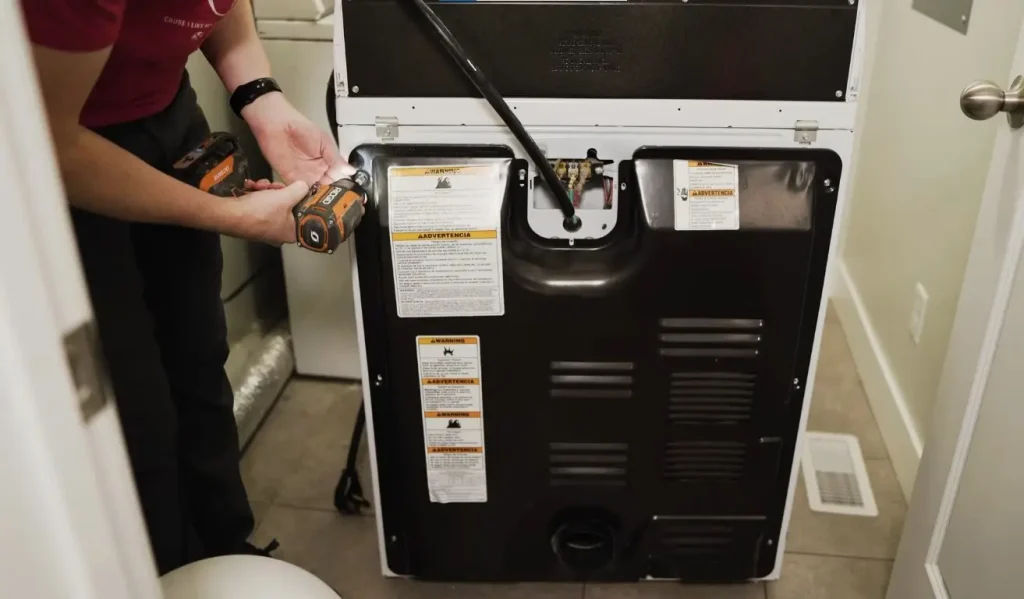
Unplug the dryer or turn off power at the breaker before any inspection that requires moving the machine or reaching behind it.
- Clean the lint filter thoroughly. Wash it if residue is present.
- Check the exterior vent. Go outside while the dryer is running and feel for strong airflow. The flap should open freely.
- Look behind the dryer. Make sure the flexible or rigid duct is not crushed or kinked.
- Reduce the load size and try a normal heat cycle.
- Wipe the moisture sensor bars inside the drum with a soft cloth and rubbing alcohol.
- Confirm the washer is spinning correctly and leaving clothes only damp, not soaking.
These steps solve many long-drying cases. They also give a technician clear information if service is needed.
When to Call for Professional Help
Call a technician if:
- Airflow at the exterior vent is weak even after you clean the lint filter.
- The dryer feels excessively hot on the outside.
- You notice a burning smell.
- Clothes remain damp after you clear the basic restrictions.
- The heating system appears weak.
- The vent run is long, goes through walls or the attic, or has multiple bends.
A restricted vent should not be ignored. Continued use raises both drying time and fire risk.
Typical Dryer Repair and Service Costs
Most dryer repairs fall between $100 and $300. Many common jobs land in the $150 to $250 range.
A diagnostic fee often runs $70 to $130 and is frequently applied toward the repair. Heating element, thermal fuse, or thermostat work is common. Full vent cleaning, when needed, is a separate service that restores proper airflow.
Repair usually makes sense when the cost stays reasonable compared with a new dryer and the machine still has useful years left. Most dryers last 12 to 16 years with normal care.
Local Notes for Stockton Homes
Stockton’s hot, dry summers increase laundry volume in many households. More loads mean faster lint buildup. Dusty conditions common in the Central Valley can add to the debris that reaches the vent system. Homes with longer vent runs or flexible ducting see restrictions develop more quickly.
Regular vent attention pays off in both shorter drying times and lower fire risk.
Prevention Habits That Keep Drying Times Normal
- Clean the lint filter before every load.
- Wash the filter monthly to remove softener residue.
- Have the full vent system cleaned at least once a year, or more often in high-use homes.
- Avoid overloading the dryer.
- Use rigid metal ducting when possible instead of long flexible foil or plastic hose.
- Keep the area behind the dryer clear so the duct is not crushed.
- Check exterior airflow periodically.
These steps keep drying times short and reduce energy use.
What a Professional Visit Usually Includes
A technician will test airflow, inspect the vent path, check the heating system, and examine the blower and sensors. They explain the exact problem in plain language and give the full cost before starting work. Clearing a restricted vent or replacing a weak heating component restores normal performance.
Bottom Line
A dryer that takes too long to dry clothes almost always has an airflow problem or a weak heating system. Start with the lint filter and exterior vent check. Many cases improve immediately.
If the problem continues, professional diagnosis protects both your time and your home. Restricted vents waste energy and raise fire risk. Addressing the issue early keeps laundry efficient and the appliance running safely.
Stockton homeowners who keep the lint filter clean and the vent system clear enjoy shorter cycles and lower utility costs. Contact a local technician when the basic checks do not restore normal drying times.