Dishwasher Not Cleaning Properly – Quick Diagnosis Guide for Stockton Homes

Your dishwasher finishes the cycle, but the dishes still have food residue, grease, or a cloudy film. Glasses look spotted, and plates feel gritty. This problem frustrates many Stockton homeowners because a dishwasher that runs but does not clean wastes time and water. Most causes are simple to identify and often easy to correct.
Modern dishwashers reuse a small amount of water during the cycle. They rely on strong spray pressure, hot water, and a clean filter to remove food and grease. When any part of that system is blocked or weak, cleaning performance drops.
Most Common Causes Ranked by Frequency
1. Dirty or Clogged Filter
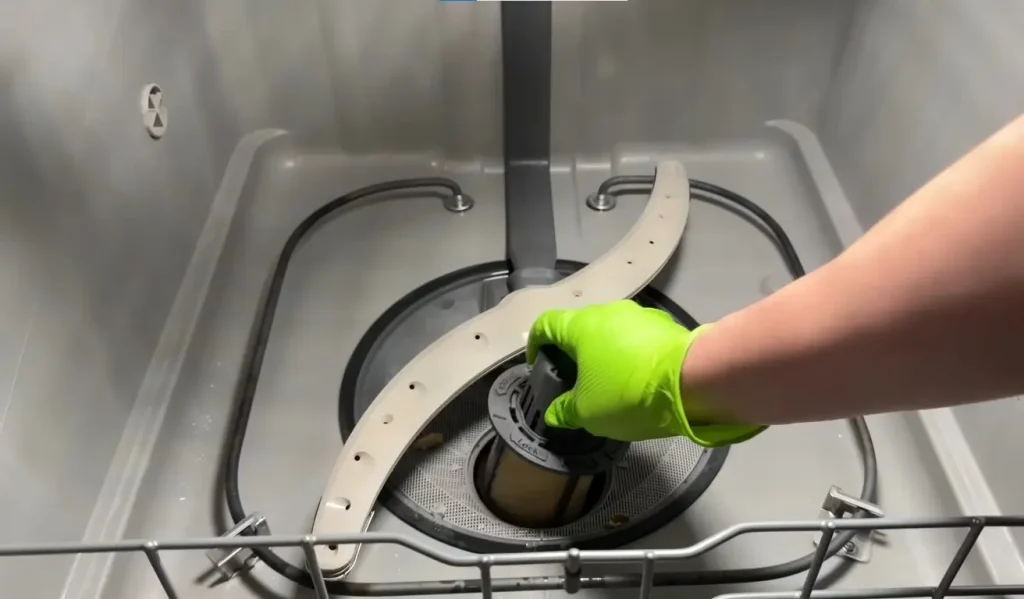
The filter sits at the bottom of the tub. It traps food particles so they do not recirculate onto clean dishes. When the filter clogs with grease and debris, dirty water sprays back onto the load.
Most newer dishwashers have a manual filter that needs regular cleaning. Many homeowners never clean it. A clogged filter is the single most common reason cleaning performance slowly declines.
2. Clogged Spray Arms
Spray arms have small holes that shoot water at the dishes. Food particles, seeds, labels, and hard-water minerals block these holes. When jets are clogged, water cannot reach all surfaces with enough force.
The arms may also stop spinning if debris jams them or if tall items block their path. Both upper and lower arms need free movement and clear holes.
3. Improper Loading
Dishes stacked too tightly or facing the wrong direction block the spray. Large pots, pans, or cutting boards can stop the spray arms from rotating. Items nested together create shadows where water never reaches.
Proper spacing lets water hit every surface. Overloading is one of the fastest ways to ruin cleaning results.
4. Detergent and Rinse Aid Problems
Using the wrong detergent, too little detergent, or old clumps that do not dissolve leaves residue. Liquid hand soap creates excess suds and should never go in a dishwasher.
Rinse aid helps water sheet off dishes and reduces spots, especially in hard-water areas. Skipping it often causes cloudy glasses and film.
5. Water Temperature Too Low
Dishwashers need water around 120°F to dissolve grease and activate detergent properly. If the water heater is set too low or the dishwasher sits far from the heater, the water may not reach the needed temperature.
Some machines heat the water internally. Others rely mainly on the home’s hot water supply.
6. Hard Water and Mineral Buildup
Hard water leaves mineral deposits that clog spray jets and leave white film on dishes. Over time, the buildup reduces spray pressure and cleaning power.
7. Low Water Fill or Inlet Problems
If the dishwasher does not fill with enough water, the spray arms cannot work effectively. A restricted inlet valve, clogged screen, or low household water pressure can cause this.
8. Detergent Dispenser Not Opening
The dispenser door can stick from residue or a mechanical fault. Detergent stays trapped and never enters the wash. Dishes go through the cycle with little or no cleaning agent.
Safe Checks You Can Perform First
Unplug the dishwasher or turn off power at the breaker before removing parts.
- Remove the bottom rack and clean the filter. Twist it out according to your model, rinse under hot water, and scrub gently with a soft brush.
- Pull the spray arms (most unscrew or unclip) and check every hole. Clear blockages with a toothpick or soft brush. Make sure the arms spin freely by hand.
- Reload the dishwasher with proper spacing. Face soiled surfaces toward the spray. Keep tall items from blocking the arms.
- Confirm you are using fresh dishwasher detergent (pods, powder, or gel made for dishwashers) and rinse aid.
- Run the hot water at the kitchen sink for 30 seconds before starting the dishwasher so hotter water reaches the machine.
- Check that the detergent dispenser opens freely during a cycle (you can watch through the door on many models).
These steps restore cleaning performance in a large percentage of cases.
When to Call a Professional
Call for service if:
- Cleaning stays poor after you clean the filter and spray arms.
- The dishwasher fills with very little water.
- You hear the pump running weakly or not at all.
- Error codes appear.
- The detergent dispenser never opens.
- The machine is still under warranty.
Internal problems such as a failing circulation pump, diverter, or inlet valve need proper diagnosis and parts.
Typical Repair Costs
Most dishwasher repairs fall between $100 and $300. Many common jobs land in the $150 to $250 range.
A diagnostic fee often runs $70 to $130 and is frequently applied toward the repair. Simple part replacements such as a spray arm, inlet valve, or dispenser stay lower. Pump or control board work costs more.
Repair usually makes sense when the cost stays under half the price of a new dishwasher, and the unit still has useful years left. Most dishwashers last 9 to 12 years with normal care.
Local Notes for Stockton Homes
Stockton and the surrounding Central Valley have varying water hardness. Mineral buildup can clog spray arms and filters faster in some neighborhoods. Homes with older plumbing or lower water pressure may also see weaker fill levels.
Regular filter cleaning and occasional use of a dishwasher cleaner help keep performance strong in local conditions.
Prevention Habits That Keep Dishes Clean
- Clean the filter every two to four weeks, or more often with heavy use.
- Check spray arm holes every few months.
- Scrape large food scraps but avoid heavy pre-rinsing on sensor models.
- Use the correct amount of quality dishwasher detergent and rinse aid.
- Load dishes with space between them and spray arms free to spin.
- Run a monthly empty hot cycle with a dishwasher cleaner or white vinegar to reduce buildup.
- Keep the kitchen hot water temperature near 120°F.
These simple habits prevent most cleaning problems.
What a Professional Visit Usually Includes
A technician will inspect the filter, spray arms, water fill level, detergent dispenser, and circulation system. They test water temperature and check for mechanical or electrical faults. They explain the exact problem in plain language and give the full cost before starting work.
Quality parts and a clear warranty protect the repair. Most straightforward cleaning-related repairs finish in one visit.
Bottom Line
A dishwasher that runs but does not clean properly is usually caused by a dirty filter, clogged spray arms, poor loading, detergent issues, or low water temperature. Start with the simple checks listed above. Many problems clear without parts.
If the dishes still come out dirty after those steps, professional diagnosis restores proper cleaning power. Addressing the issue early keeps the machine efficient and extends its useful life.
Stockton homeowners who clean the filter regularly and keep the spray arms clear enjoy consistently clean dishes. Contact a local technician when the basic diagnosis does not solve the problem.
Need Help with Your Dishwasher?
If your dishwasher still leaves dishes dirty after trying the simple checks above, it may need professional attention. Our local technicians can diagnose the exact problem and restore proper cleaning performance.
We serve Stockton and nearby areas with clear pricing and reliable service.
Call us at +1 (209) 269-5107 or request service online. We’re ready to help.