Washer Leaking Water – Where to Look First

Water on the floor next to your washing machine is never a good sign. The leak may appear only during fill, only during drain, or constantly. Finding the source quickly limits damage and points to the right repair.
Most washer leaks come from a short list of places. The location of the water and the stage of the cycle usually reveal the cause before you remove any panels.
Start With Location and Timing
Watch one full cycle if it is safe to do so. Note exactly where the water first appears and when it starts.
- Water at the front near the door usually means a door seal problem on front-load machines.
- Water at the rear often comes from the fill hoses or the water inlet valve.
- Water pooling directly under the center of the machine points to the drain pump, an internal hose, or a tub seal.
- A leak that starts during the fill phase is almost always on the supply side.
- A leak that appears mainly during drain or spin often involves the pump or drain hose.
These patterns cover the majority of cases.
Most Common Causes by Location
Front of the Machine (Especially Front-Loaders)
The door boot, also called the door gasket or bellows, creates the seal between the door and the tub. Over time, the rubber can tear, crack, or get cut by coins, underwires, or sharp objects. Debris trapped in the folds can also hold water that seeps out. Water then runs down the front and pools underneath, making it look like a bottom leak.
Rear of the Machine
The hot and cold fill hoses connect the household water supply to the inlet valve. These hoses age, crack, or loosen at the fittings. The rubber washers inside the couplings can fail. The inlet valve itself can crack or develop a slow leak at the body or solenoids. Water at the back during fill is the classic sign.
Under the Center of the Machine
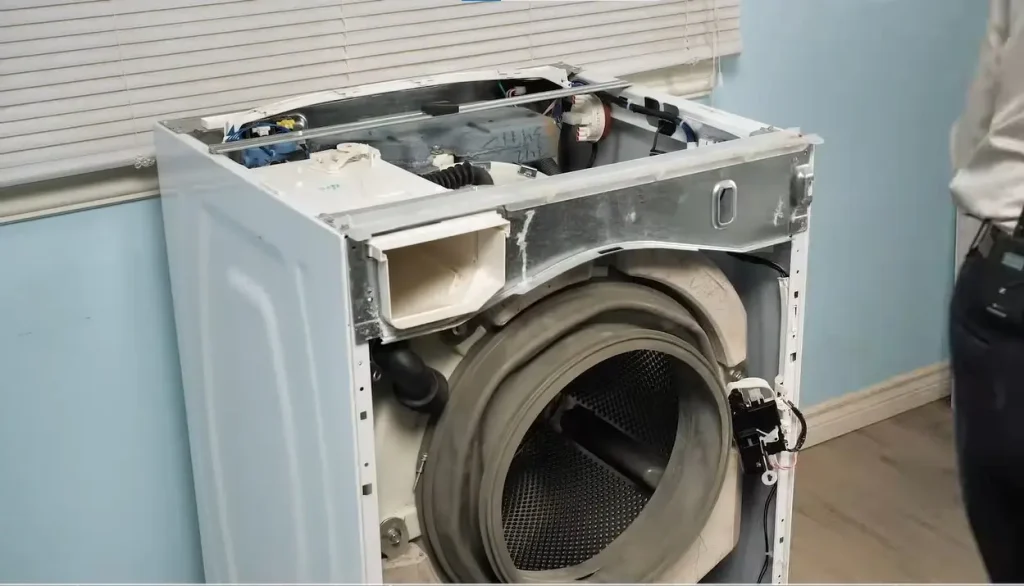
The drain pump sits low in the cabinet. A cracked pump housing, worn seal, or loose clamp on the pump hose lets water escape during the drain cycle. Internal hoses that connect the tub, pump, and dispenser can also develop pinholes or slip off their fittings. On some models, a failing tub seal allows water to drip from the center.
Other Frequent Causes
Oversudsing from too much detergent or the wrong type can push water over the top of the tub on top-load machines. A clogged dispenser or blocked detergent drawer can overflow during fill. A cracked outer tub is less common but produces a steady leak from underneath. A house drain that cannot keep up can cause water to back up and spill.
Safe Checks You Can Perform First
Turn off the water supply valves at the wall before inspecting hoses.
- Look at the fill hoses and connections at both ends. Feel for dampness and check for cracks or bulges.
- Examine the door boot on a front-loader. Pull the rubber back and look for tears, especially along the bottom.
- Check the drain hose for kinks, cracks, or a loose connection at the standpipe or sink.
- Clean the detergent dispenser and make sure it is not clogged.
- Confirm you are using the correct amount of HE detergent if the machine requires it.
- Level the washer. An unlevel machine can contribute to splashing or door-seal problems.
Do not run the machine with a known active leak for long periods. Water can damage flooring and create electrical hazards.
When to Call a Technician
Call for service if:
- The leak continues after you tighten hoses and clean the door seal area.
- Water appears from under the center of the machine.
- You see cracks in the pump, tub, or inlet valve.
- The door boot is torn and needs replacement.
- The machine is still under warranty.
Pump, inlet valve, door boot, and internal hose repairs are common and usually completed in one visit. Tub seal or outer tub problems are more involved and may change the repair-versus-replace decision on older machines. Related problems such as no-spin or no-drain issues often share the same components — see our guide on washer not spinning or draining
Typical Repair Costs
Many leak repairs fall between $150 and $400. Door boot replacement, drain pump work, and inlet valve replacement are among the more frequent jobs. Simple hose or clamp fixes cost less. Major tub or bearing-related leaks cost more and may approach the price of a new machine on units that are already past eight or nine years old.
A diagnostic fee of $70 to $130 is common and is often applied toward the repair.
Local Notes for Stockton Homes
Hard water common in parts of the Central Valley can leave mineral deposits that stress inlet valves and accelerate wear on rubber parts. Dusty conditions also increase the chance of debris entering the pump or dispenser. Homes with older rubber fill hoses should consider switching to braided stainless-steel hoses, which resist bursting better over time.
Laundry rooms on slab floors can hide slow leaks until damage is already done. Catching a leak early protects the floor and the machine.
Prevention Tips
- Inspect fill hoses every six to twelve months for cracks or bulging.
- Clean the door boot on front-loaders regularly and remove trapped items.
- Use the correct type and amount of detergent.
- Avoid overloading the machine.
- Keep the area around the washer dry and check for dampness after loads.
- Replace rubber fill hoses every five years or switch to braided stainless lines.
What a Professional Visit Usually Includes
A technician will isolate the leak by location and cycle stage, inspect the door seal, hoses, pump, inlet valve, and related components, and test for proper operation. They explain the exact source in plain language and give the full cost before starting work. Most common leak repairs are finished in a single visit with quality parts and a clear warranty.
Bottom Line
A leaking washer is usually caused by a worn door boot, loose or damaged hoses, a failing drain pump, or a leaking inlet valve. The place where water appears and the stage of the cycle tell you where to look first.
Start with the simple external checks. If the leak continues, professional diagnosis stops the water and prevents further damage. Stockton homeowners who act quickly protect both the machine and the floor underneath it.
Contact a local technician when the basic steps do not stop the leak. Clear testing and timely repair restore a dry laundry room.